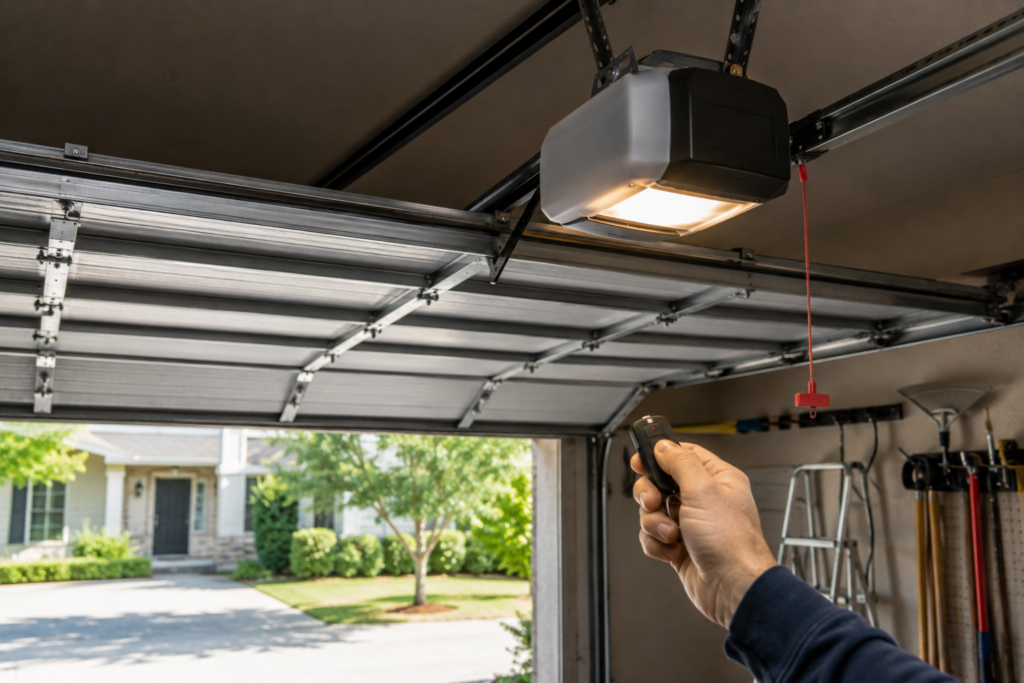
Why Does My Garage Door Opener Run but the Door Doesn’t Move?
Hearing your garage door opener run while the garage door stays completely still can be confusing. You press the remote, hear the motor activate, but the door does not open or close. This situation usually means the opener is receiving the command and attempting to operate, but something is preventing the movement from being transferred to the garage door. The cause may involve the opener’s drive system, trolley, emergency release, springs, cables, or another mechanical component. If you’re searching for “why is my garage door opener running but the door isn’t moving?”, understanding what is happening can help you determine whether the problem is with the opener or the garage door itself. For homeowners in Manassas, Manassas Park, Ashburn, Woodbridge, Gainesville, Fairfax, and surrounding areas, professional garage door service can help identify the actual cause. What Does It Mean If My Garage Door Opener Runs but the Door Doesn’t Move? When the opener motor runs but the door does not move, the motor is receiving a command, but the mechanical connection between the opener and garage door may not be working correctly. Possible causes include: The exact cause depends on what the opener sounds like and whether any part of the garage door attempts to move. Before attempting repairs, it is important to understand that garage doors are heavy and contain components that can store significant tension. Could the Emergency Release Be Disconnected? Yes. An accidentally activated emergency release can prevent the opener from moving the garage door. The emergency release allows the garage door to be disconnected from the automatic opener so the door can be operated manually. If the door has recently been operated manually, the opener may no longer be connected to it in the way it normally is. You may notice that: If you are unsure how the emergency-release mechanism works on your particular opener, professional assistance can help prevent damage to the system. Could a Broken Garage Door Spring Prevent the Door From Moving? Yes. A broken spring can prevent a garage door from operating normally. Garage door springs help counterbalance the weight of the door. When a spring breaks, the garage door can become extremely heavy. You may notice: A broken spring is not a component homeowners should attempt to repair themselves. Springs are under high tension, and incorrect handling can cause serious injury or additional damage. If you suspect a broken spring, professional garage door repair is the safer option. Could a Broken Garage Door Cable Be the Problem? Garage door cables work with the spring and lifting system to help the door move properly. If a cable breaks, comes off the drum, or becomes damaged, the garage door may become uneven or stop moving. Possible signs include: If a cable appears damaged or disconnected, do not attempt to pull or adjust it. A professional technician can inspect the cable system and determine what repair is required. Why Does the Opener Motor Run but the Trolley Doesn’t Move? If you hear the motor running but the trolley does not move along the rail, the problem may be within the opener’s drive system. Depending on the type of opener, the system may use a chain, belt, screw drive, or another mechanism to transfer movement. A failure in one of these components can cause the motor to run without moving the garage door. Potential causes may include: Because the exact design varies between opener models, a technician can inspect the system and identify which component is preventing normal operation. Why Does the Trolley Move but the Garage Door Doesn’t? If the trolley moves along the opener rail but the garage door remains stationary, the problem may be with the connection between the trolley and the door. The garage door opener relies on this connection to transfer the opener’s movement to the door. If that connection has become disconnected or damaged, the opener can appear to work normally while the door does not respond. This is different from an opener motor failure because the motor and drive system may still be operating. A professional inspection can determine whether the connection needs to be restored or whether another mechanical problem is involved. Can I Open the Garage Door Manually If the Opener Runs but the Door Doesn’t Move? In some situations, a garage door can be operated manually after it has been properly disconnected from the automatic opener. However, this should only be done when the door itself appears safe and balanced. Do not attempt to manually lift a garage door if: A heavy garage door can move unexpectedly or become difficult to control if a major component has failed. If you are unsure whether the door can be safely operated manually, contact a garage door professional. Why Is My Garage Door Opener Running but the Door Is Stuck Halfway? A garage door that stops halfway while the opener continues running can indicate a mechanical problem or an issue affecting the opener’s ability to move the door. Possible causes include: The location where the door stops can provide useful information. For example, if the door repeatedly stops at approximately the same point, there may be resistance or a mechanical issue affecting that part of its travel. Avoid repeatedly activating the opener if the door is stuck. Continued operation can place additional strain on the system. Could the Garage Door Tracks Prevent the Door From Moving? Yes. Damaged, obstructed, or misaligned tracks can prevent a garage door from moving correctly. The opener may be powerful enough to run, but the door still cannot travel properly if the mechanical system is obstructed. Track problems may be accompanied by: Garage door tracks should not be forced back into position without understanding what caused the problem. A technician can inspect the tracks, rollers, cables, springs, and opener together to determine the source of the resistance. How Do I Know If the Problem Is the Opener or the Garage Door? One of the most important parts of troubleshooting is determining which
Why Does My Garage Door Opener Run but the Door Doesn’t Move? Leer más »