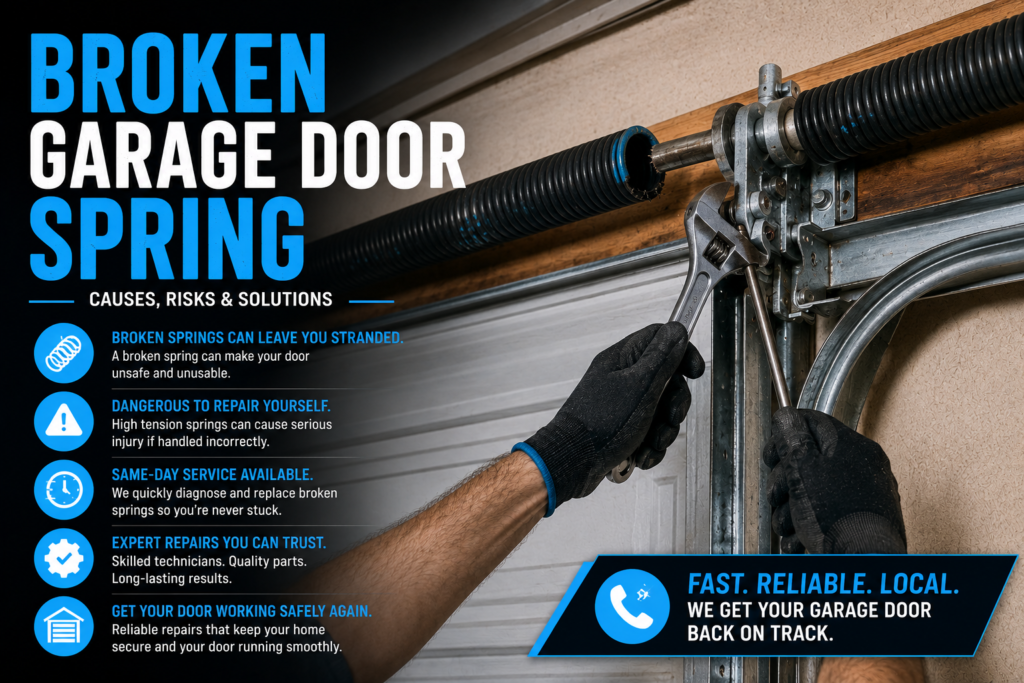
Broken Garage Door Spring — Signs, Dangers, and What to Do
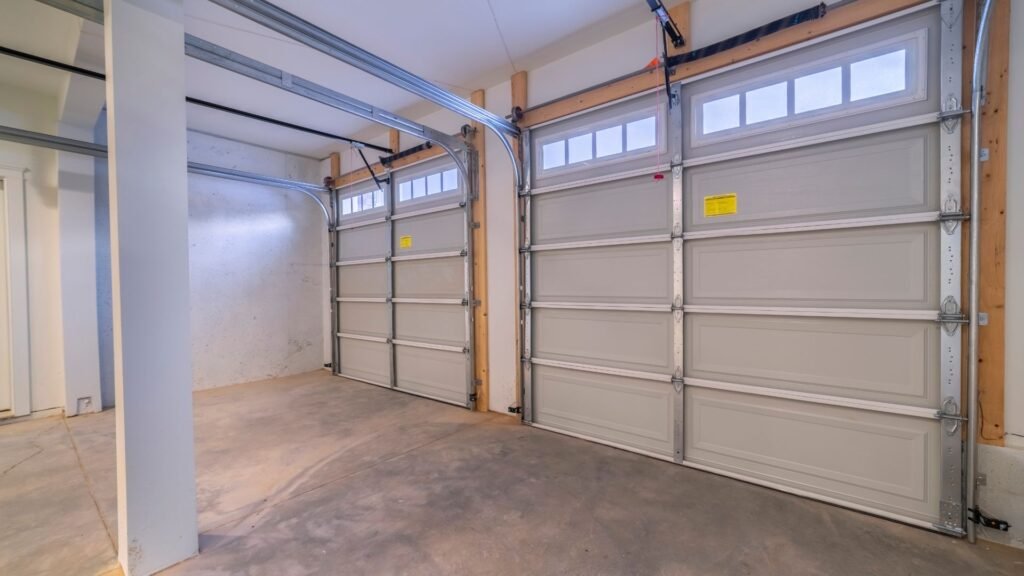
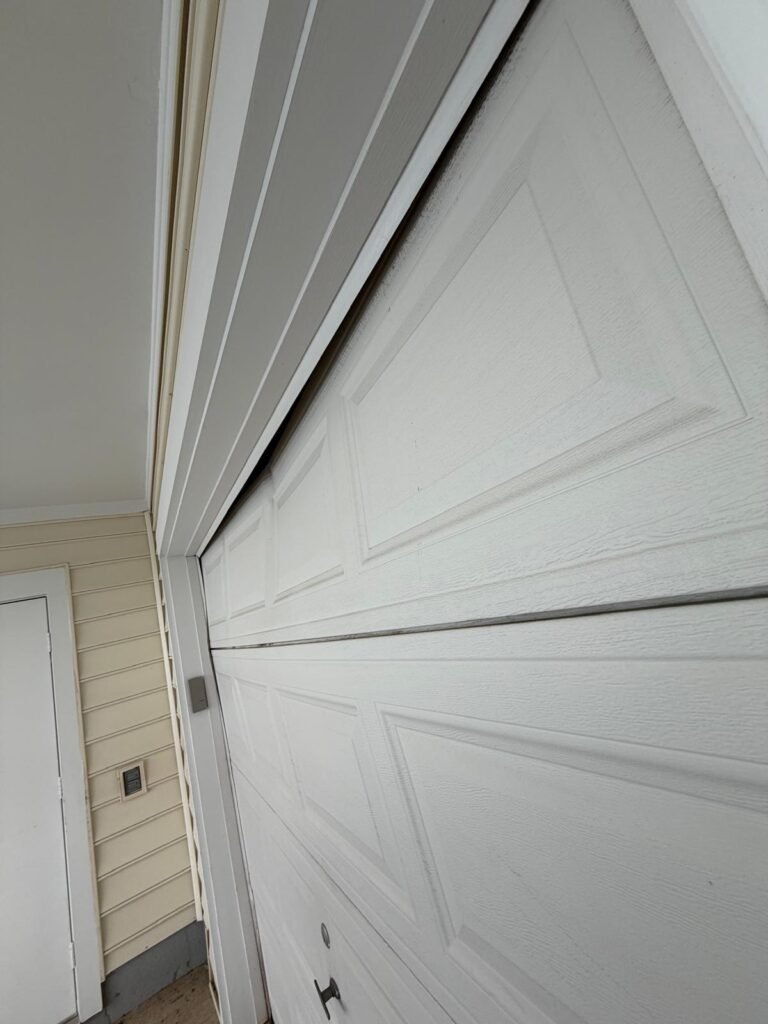
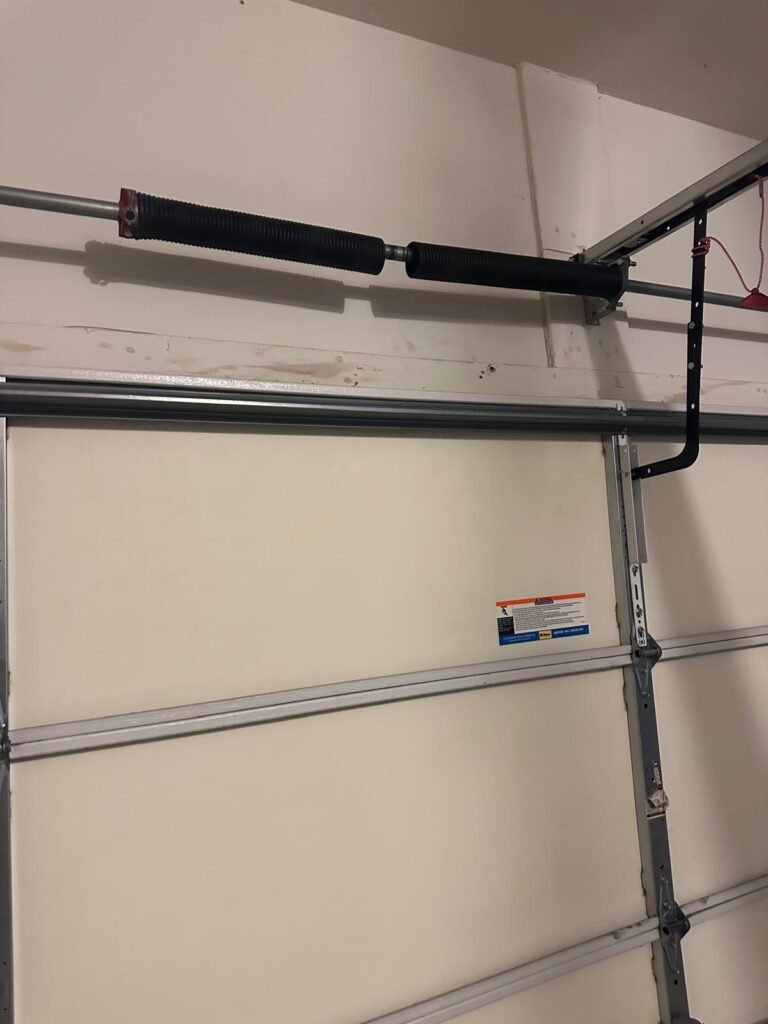
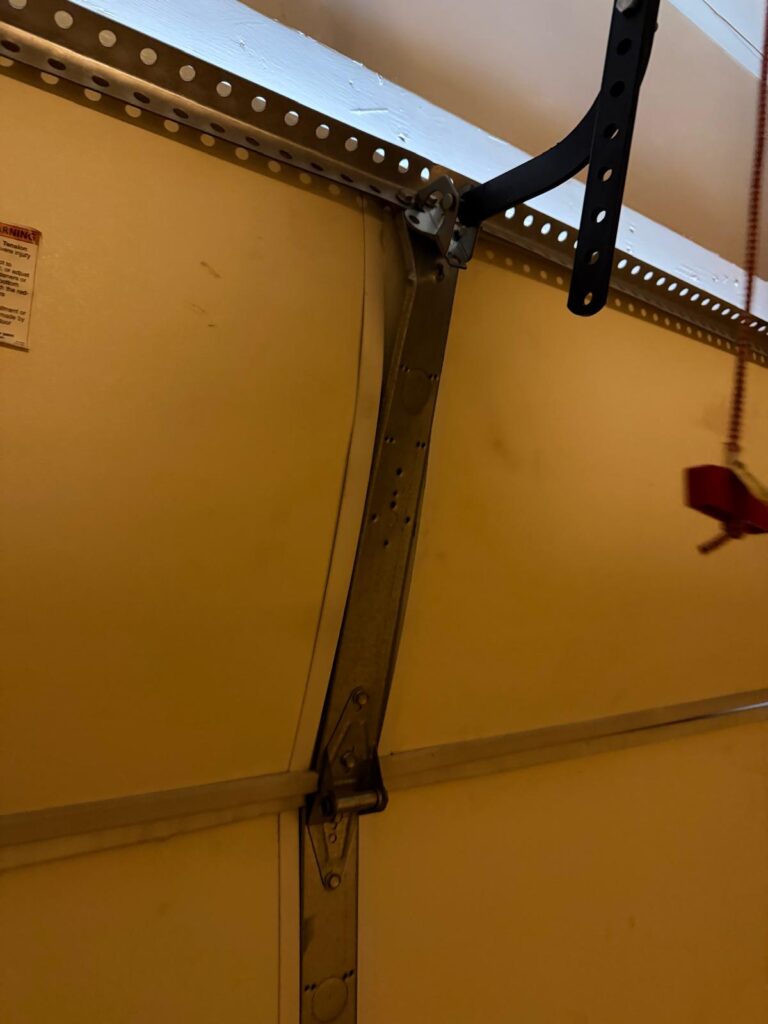
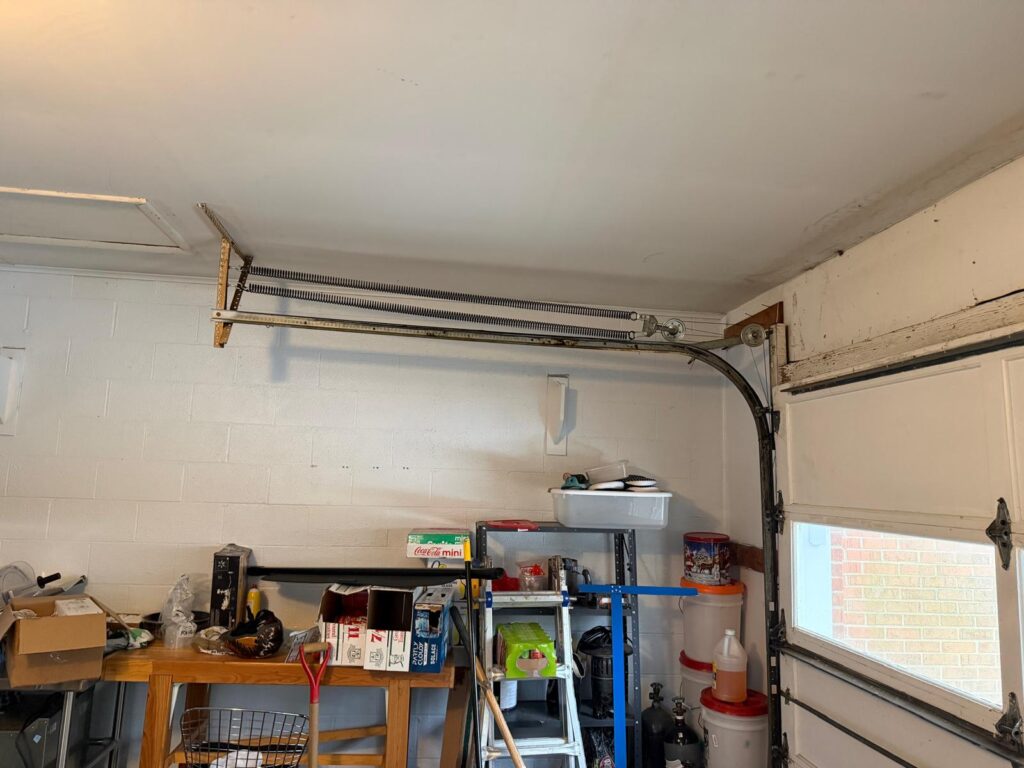
A loud bang from the garage, a door that suddenly won’t budge, or a door that only lifts a few inches before stopping — these are the classic signs of a broken garage door spring. It’s one of the most common garage door problems homeowners run into, and also one of the most misunderstood. Teo Garage Doors repairs broken springs every week for homeowners in Manassas, Ashburn, Woodbridge, Fairfax, Gainesville, and Culpeper. This guide covers exactly how to recognize a broken spring, why it happens, and what you should — and shouldn’t — do next. What does a broken garage door spring sound like? A broken garage door spring usually sounds like a loud bang or pop, similar to a gunshot. It happens the moment the spring snaps under tension. Afterward, the door will feel extremely heavy, won’t open more than a few inches, or won’t move at all. Call 571-428-7299 for same-day spring replacement. How Garage Door Springs Work Every garage door relies on springs to counterbalance its weight. Without them, the door would be far too heavy for a standard opener to lift. There are two main types: Torsion springs sit horizontally above the door, mounted on a metal bar. They twist and store energy as the door closes, then release that energy to help lift the door. Extension springs run along the tracks on either side of the door and stretch to store energy instead of twisting. Both types wear out over time from repeated use, and both are under extremely high tension — which is exactly why a broken spring is not a DIY repair. Signs Your Garage Door Spring Is Broken A loud bang from the garage This is the most common way homeowners discover a broken spring. It usually happens when the door is closed and no one is around, which is why many people don’t connect the sound to the spring right away. The door won’t open, or only opens a few inches Without a working spring, the opener has to lift the full weight of the door on its own. Most openers aren’t built for that and will either stall, strain, or trigger a safety reverse. The door feels unusually heavy when opened manually If you disconnect the opener and try to lift the door by hand, a door with a healthy spring should feel relatively light and balanced. A door with a broken spring will feel extremely heavy and may not stay open on its own. A visible gap in the spring If you can safely see the spring above the door, a broken torsion spring will usually show a visible gap in the coil where it snapped. The door looks crooked or uneven This is more common with extension springs — if one breaks and the other doesn’t, the door can hang unevenly or shift to one side when operated. Why Garage Door Springs Break Normal wear and cycle life Most torsion springs are rated for a certain number of open-close cycles — typically 10,000. A household using the garage door 3-4 times a day will reach that number in roughly 7-9 years. Once a spring approaches or passes its rated cycle life, the risk of failure increases significantly. Lack of lubrication Dry springs experience more friction and metal fatigue with every cycle. Regular lubrication extends spring life meaningfully. Rust and corrosion Moisture exposure weakens the metal over time, making springs more likely to snap under normal tension. Temperature swings Cold weather causes metal to contract and become more brittle, which is why spring failures spike during the coldest months of the year. Incorrect spring size or tension A spring that wasn’t properly matched to the door’s weight during a previous installation or repair will wear out faster and is more prone to premature failure. What to Do If Your Garage Door Spring Breaks Do not try to open the door with the opener. Repeatedly pressing the button will strain the motor and can cause additional damage. Do not attempt to replace the spring yourself. Garage door springs are under extreme tension — enough to cause serious injury if handled without the right tools and training. This is one repair we always recommend leaving to a professional. Do not manually force the door open. Without the spring’s counterbalance, the door is far heavier than it looks and can drop unexpectedly. Do call a professional for same-day replacement. Teo Garage Doors carries spring inventory for most standard residential doors and completes most spring replacements the same day you call. How Much Does Garage Door Spring Replacement Cost? Pricing depends on the type of spring (torsion vs. extension), the size and weight rating needed for your door, and whether one or both springs need replacement. Many technicians recommend replacing both torsion springs at the same time, even if only one has broken, since the second is usually close behind in wear. We provide a free, written estimate before any work begins. How much does it cost to replace a broken garage door spring? Cost depends on the spring type, size, and whether one or both springs need replacement. Teo Garage Doors provides a free written estimate before starting any work. Call 571-428-7299 for a same-day quote. Can a Garage Door Spring Be Repaired Instead of Replaced? No. Once a spring breaks, it cannot be repaired or spliced back together safely. The metal has failed under tension and the only safe fix is full replacement. Attempting a temporary fix, like tying off a broken spring, creates a serious safety hazard. How to Prevent Spring Failure Regular maintenance is the best way to avoid an unexpected spring break. A yearly inspection can catch a spring that’s approaching the end of its cycle life before it snaps, letting you schedule a replacement on your own timeline instead of dealing with an emergency. For more information read: Garage Door Maintenance Tips to Extend the Life of Your Door Frequently Asked Questions Can I drive my
Broken Garage Door Spring — Signs, Dangers, and What to Do Leer más »